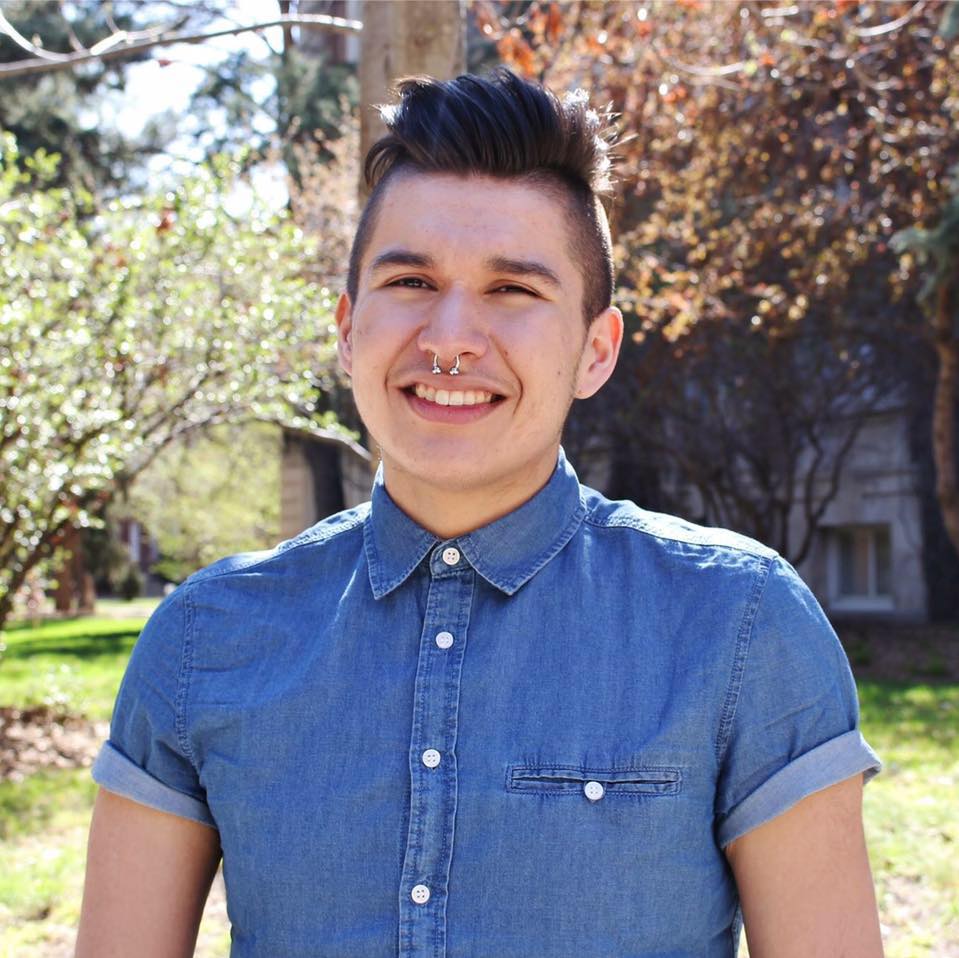
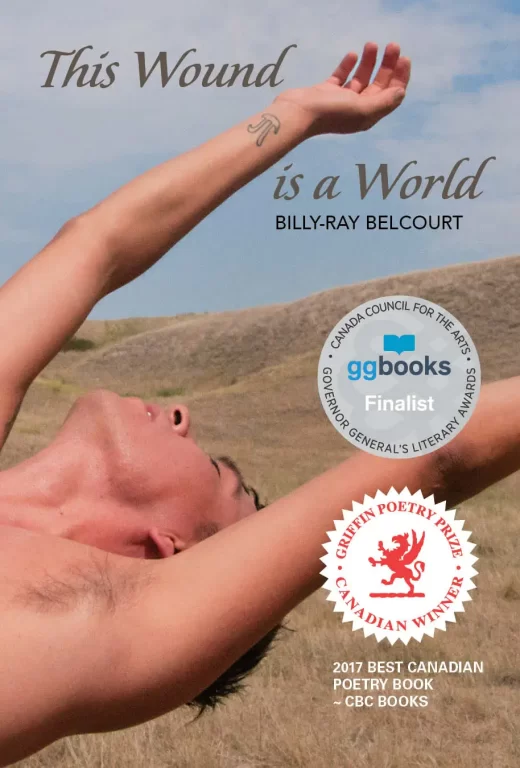
Billy-Ray Belcourt is a writer and academic from the Driftpile Cree Nation and an Associate Professor in the School of Creative Writing at the University of British Columbia. His debut collection, This Wound is a World (2017), won the 2018 Canadian Griffin Poetry Prize, making him the youngest ever winner, as well as the Robert Kroetsch City of Edmonton Book Prize and an Indigenous Voices Award. It was also a finalist for the Governor General’s Literary Award for Poetry, the Gerald Lampert Memorial Award, the Raymond Souster Award, and the Robert Kroetsch Award for Poetry, and was named CBC Books’ best Canadian poetry collection of 2017.
Following his acclaimed debut, Belcourt has published NDN Coping Mechanisms: Notes from the Field (2019), winner of the Stephan G. Stephansson Award for Poetry; A History of My Brief Body (2020), winner of the Hubert Evans Non-Fiction Prize; A Minor Chorus (2022), winner of the Ethel Wilson Fiction Prize; and Coexistence (2024).
Judges’ Citation
Blending the resources of love song and elegy, prayer and manifesto, Billy-Ray Belcourt’s This Wound is a World shows us poetry at its most intimate and politically necessary.
Blending the resources of love song and elegy, prayer and manifesto, Billy-Ray Belcourt’s This Wound is a World shows us poetry at its most intimate and politically necessary. Mindful of tangled lineages and the lingering erasures of settler colonialism, Belcourt crafts poems in which “history lays itself bare” – but only as bare as their speaker’s shapeshifting heart. Belcourt pursues original forms with which to chart the constellations of queerness and indigeneity, rebellion and survival, desire and embodiedness these poems so fearlessly explore. Between its bold treatment of sexuality and wary anatomy of despair, This Wound is a World peels back the layers of feeling and experience to offer, finally, the glimmerings of hope – which only sometimes looks like escape: “follow me out the backdoor of the world”. This electrifying book reminds us that a poem may live twin lives as incantation and inscription, singing from the untamed margins: “grieve is the name i give to myself / i carve it into the bed frame. / i am make-believe. / this is an archive. / it hurts to be a story.
Selected poems
by Billy-Ray Belcourt
i fall into the opening between subject and object
and call it a condition of possibility.
when i speak only the ceiling listens.
sometimes it moans.
if i have a name
let it be the sound his lips make.
there is no word in my language for this.
sometimes my kookum begins to cry
and a world falls out.
grieve is the name i give to myself.
i carve it into the bed frame.
i am make-believe.
this is an archive.
it hurts to be a story.
i am the boundary between reality and fiction.
it is a ghost town.
you dreamt me out of existence.
you are at once a map to nowhere and everywhere.
yesterday was an optical illusion.
i kiss a stranger and give him a middle name.
i call this love.
it lasts for exactly twenty minutes.
i chase after that feeling.
which is to say:
i want to almost not exist.
almost is the closest i can get to the sky.
heaven is a wormhole.
i first found it in another man’s armpit.
last night i gave birth to a woman and named her becoming.
she is four cree girls between the ages of 10 and 14 from northern saskatchewan.
we are a home movie
i threw out by accident.
all that is left is the signified.
people die that way.
Copyright © 2016, Billy-Ray Belcourt, This Wound is a World, Frontenac House
Gay Incantations
1. my body is a stray bullet. i was made from crossfire. love was her last resort. his mouth, a revolver. I come from four hundred no man’s lands.
2. “smell my armpit again/ i miss it when you do that.”
3. his moaning is an honour song i want to world to.
4. one of the conditions of native life today is survivor’s guilt.
5. it is july 2016 and the creator opens up the sky to attend a #blacklivesmatter protest. there, she bumps into weesageechak and warns him that if policemen don’t stop killing black men she will flood america and it will become a lost country only grieving mothers will know how to find. this, she says, is how the world will end and be rebuilt this time.
6. haunting is a gender. gender is another word for horror story.
7. “i can hear him screaming for me, and i can hear him saying, ‘stop, honey help me.’”
8. i am trying to figure out how to be in the world without wanting it. this, perhaps, is what it means to be native.
2: from Lilting (2014, dir. Hong Khaou).
7: see: http//www.cbc.ca/news/canada/Calgary/rcmp-gleichen-christian-duck-chief-excessive-force-1.3521620
Copyright © 2016, Billy-Ray Belcourt, This Wound is a World, Frontenac House
Grief After Grief After Grief After Grief
make my mouth into a jar
spit inside me
throw me into the air
leave me there
pretend that this is love.
whisper: tonight, we will be children
tomorrow, the feeling of being in two bodies at once.
pray, if it gives you a tongue
a book for words that fall flat
a book that does not like to be written in.
where do you come from?
i am from the back alley of the world.
Copyright © 2016, Billy-Ray Belcourt, This Wound is a World, Frontenac House
The Back Alley of the World
after tomson highway
girl of surplus. girl who is made from fragments. she who can only
be spoken of by way of synecdoche. she whose name cannot be
enunciated only mouthed.
mother of that which cannot be mothered. mother who wants
nothing and everything at the same time. she who gave birth to
herself three times: 1. the miscarriage. 2. the shrunken world.
3.the aftermath.
sister of forest fire. sister who dwells in the wreckage. she who forages
for the right things in the wrong places. nothing is utopia and so she
prays to a god for a back that can bend like a tree splitting open to
make room for the heat.
aunt of the sovereignty of dust. aunt of that which cannot be
negated entirely. she who is magic because she goes missing and
comes back. she who walks upside down on the ceiling of the
world and does not fall.
kookum of love in spite of it all. kookum who made a man out of
a memory. she who is a country unto herself.
father of ash. father of a past without a mouth. he who ate too much
of the sunset.
Copyright © 2016, Billy-Ray Belcourt, This Wound is a World, Frontenac House
The Rez Sisters II
1. follow me out of the backdoor of the world.
2. how do you tell someone that they are helping you stay tuned into life?
3. what does it mean that her first breath was also her last?
4. i am so sad that i burrow into the absence of every boy who has held me.
5. i kiss him knowing that when i wake up i will be in a body differently.
6. the future is already over, but that doesn’t mean we don’t have anywhere else to go.
Copyright © 2016, Billy-Ray Belcourt, This Wound is a World, Frontenac House
We Were Never Meant to Break Like This
- Author Website
- “Poetry is about pursuing freedom and admiring beauty” Interview with FRANCE 24 English
- An Interview with Billy-Ray Belcourt ROOM Magazine
- Billy-Ray Belcourt and Layli Long Soldier BOMB Magazine