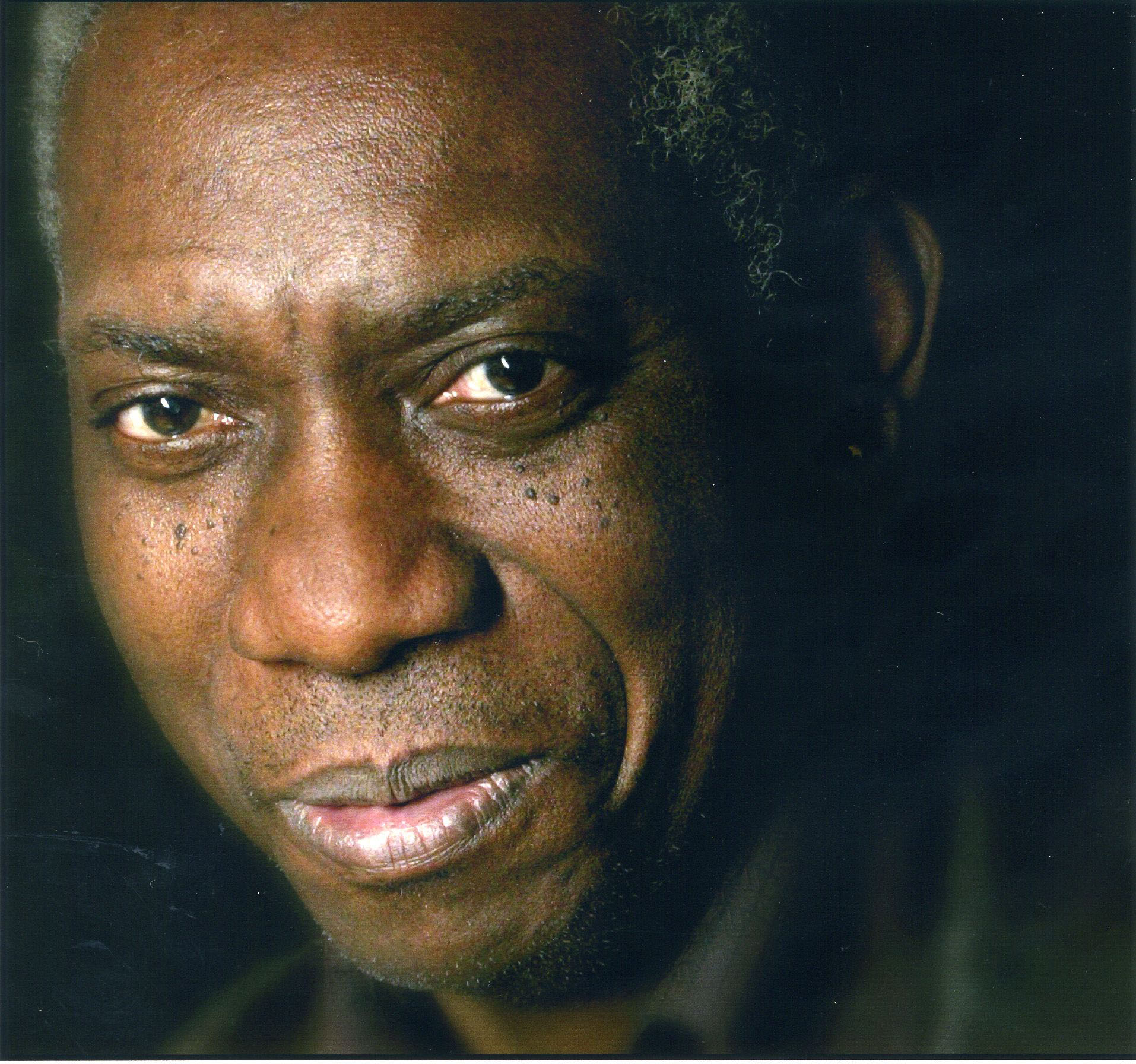
Yusef Komunyakaa’s 13 books of poems include Warhorses (2008), Taboo (2004), and Neon Vernacular: New and Selected Poems, for which he received the Pulitzer Prize. He teaches at New York University.
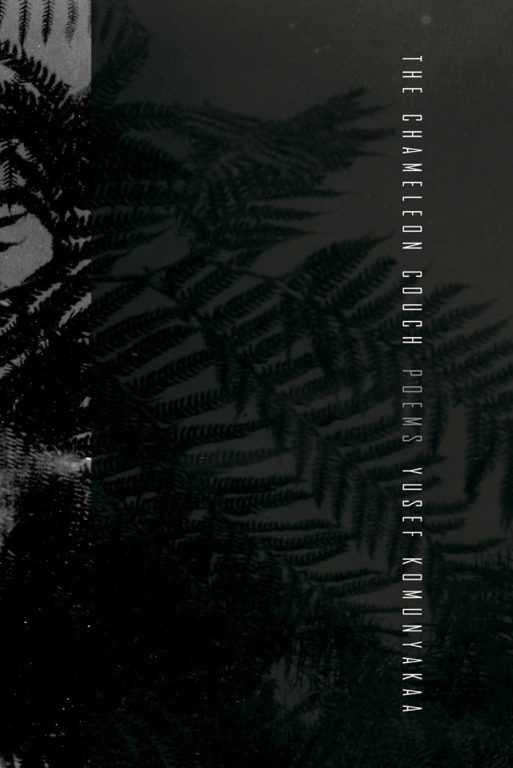
Judges’ Citation
Beneath these masks, and central to the success of these poems, is Komunyakaa’s singular voice: curious, doubtful, stubborn, damning and self-accusing, asserting itself against the never-tiring devastation wrought by history, its testimony ‘good as making a wager against the eternal hush.’
Selected poems
by Yusef Komunyakaa
A poet stands on the steps of the great cathedral,
wondering if he has been a coward in hard times.
He traveled east, north, south, & seven directions
of the west. When he first arrived on the other side
of the sea, before he fell into the flung-open arms
of a long romance, the lemon trees were in bloom.
After a year, poised on the rift of a purple haze,
he forgot all the questions he brought with him.
Couldn’t he see the tear gas drifting over Ohio
as flower children danced to Jefferson Airplane?
Will he ever write a sonnet dedicated to the memory
of four girls dynamited in a Birmingham church?
Standing in the cathedral again, in the midst
of what first calibrated his tongue—gold icons
& hidden jaguars etched into the high beams —
he remembers an emanation almost forgotten.
He can’t stop counting dead heroes who lived in his head,
sultry refrains that kept him alive in the country of clouds.
Underneath the granite floor where he stands
loom the stone buttresses of an ancient temple.
When he was a boy, with his head bowed
close to the scarred floor, he could hear voices
rising from below, their old lingua franca
binding with his. How could he forget?
Copyright © 2011 by Yusef Komunyakaa, The Chameleon Couch, Farrar, Straus and Giroux.
A Visit to Inner Sanctum
The moon temple ghosts, swinging on heavy doors.
They ride rabid dogs in the alleys of ill repute.
They decipher the language of crows at dawn
in ancient trees, the blueness of a god’s skin.
They tiptoe power lines, rope bridges around the city.
They throw stones at the ambassador’s sedan.
When afternoon prayers begin, they grown silent,
Lying in each other’s arms, dreaming of clemency.
The monkeys are no rounding up street boys.
At least, at first, it seems this is true, but in no time
The boys learn to single out a monkey in the throng
& wrestle him to the ground. He may try to bite
& to scratch, to howl, & cry ceremoniously, to plead
with the one word he knows, but then the fight
goes out of him when the rest of his great clean
returns to jabbering & the sacred picking of lice.
The boys zap him with a small laser gun.
A garnet of mute bells is tossed into the dust,
& chants go aeons back to the beginning & die.
The fearless illumination goes out of his eyes.
The boys tag him. He rises to wander freely.
As naked unholiness crawls into the night,
they’re wrestled one by one to the ground
& castrated for the music of coins jangling in a pocket.
Copyright © 2012
Last of the Monkey Gods
These frantic blooms can hold their own
when it comes to metaphor & God.
Take any name or shade of irony, any flowery
indifference or stolen gratitude, & our eyes,
good or bad, still run up to this hue.
Take this woman sitting beside me,
a descendant of Hungarian Gypsies
born to teach horses to dance & eat sugar
from her hand, does she know beauty
couldn’t have protected her, that a poppy
tucked in her hair couldn’t have saved her
from those German storm troopers?
This frightens me. I see eyes peeping
through narrow slats of cattle cars
hurrying toward forever. I see “Jude”
& “Star of David” scribbled across a depot,
but she says, That’s the name of a soccer team,
baby. Red climbs the hills & descends,
hurrying out to the edge of a perfect view,
& then another, between white & violet.
It is a skirt or cape flung to the ground.
It is old denial worked into the soil.
It is a hungry new vanity that rises
& then runs up to our bleating train.
I am a black man, a poet, a bohemian,
& there isn’t a road my mind doesn’t travel.
I also have my cheap, one-way ticket
to Auschwitz & know of no street or footpath
death hasn’t taken. The poppies rush ahead,
up to a cardinal singing on barbed wire.
Copyright © 2011 by Yusef Komunyakaa
Poppies
We talked about Baroness Pannonica
driving her Silver Pigeon to the Five Spot
to chauffeur Monk home. I was happy
not to talk football, the inventory of skulls
in a cave in Somalia, the democratic vistas
of the Cedar Tavern, or about Spinoza.
We were saying how the legs go first
& then from the eyes mystery is stolen.
I said how much I miss Bill Matthews,
that sometimes at the Village Vanguard,
Fez, or Small’s, especially when some cat
steals a riff out of Prez’s left back pocket,
I hear his Cincinnati laugh. Then our gaze
snagged on a green dress shifting the light.
If you’d asked me, I couldn’t have said why
I knew jasmine from the silence of Egypt,
or how water lives only to remember fire.
As we walked out of the sanctuary of garlic,
chive, onion, mushroom, & peppery dough,
we agreed Rahsaan could see rhythm
when he blew wounded cries of night hawks
at daybreak. The heat of the pizza parlor
followed us to the corner, & two steps later
I remembered the scent of loneliness
in my coat left draped over the chair.
I had fallen in love with its cut,
how it made me walk straighter.
When I passed the young James Dean
coming out the door with my blue-gray coat
balled up in his arms, I didn’t stop him.
I don’t know why. I just stood there
at the table. But, David, years after
I circled the globe, I’m still ashamed
of memories that make me American
as music made of harmony & malice.
Copyright © 2011 by Yusef Komunyakaa
The Story of a Coat
I am a scrappy old lion
who’s wandered into a Christian square
quavering with centuries of forged bells.
The cobblestones make my feet ache.
I walk big-shouldered, my head raised
proudly. I smell the blood of a king.
The citizens can only see a minotaur in a maze.
I know more than a lion should know.
My roar goes back to the Serengeti,
to when a savannah was craggy ice,
but now it only frightens pigeons from a city stoop.
They believe they know my brain’s contours & grammar.
Don’t ask me how I know the signs engraved
on a sundial, the secret icons behind a gaze.
I wish their crimes hadn’t followed me here.
I can hear their applause in the dusty citadel.
I know what it took to master the serpent
& wheel, the crossbow & spinal tap.
Once, I was a leopard beside a stone gate.
I am a riddle to be unraveled. I am not
& I am. When their eyes are on me
I become whatever is judged badly.
I circle the park. Hunger shapes
my keen sense of smell, a lifetime ahead.
They will follow my paw prints
till they’re lost in snow at dusk.
If I walk in circles, I hide from my shadow.
They plot stars to know where to find me.
I am a prodigal bird perched on the peak
of a guardhouse. I have a message
for Fate. The sunlight has shown me
the guns, & their beautiful sons are deadly.
Copyright © 2011 by Yusef Komunyakaa