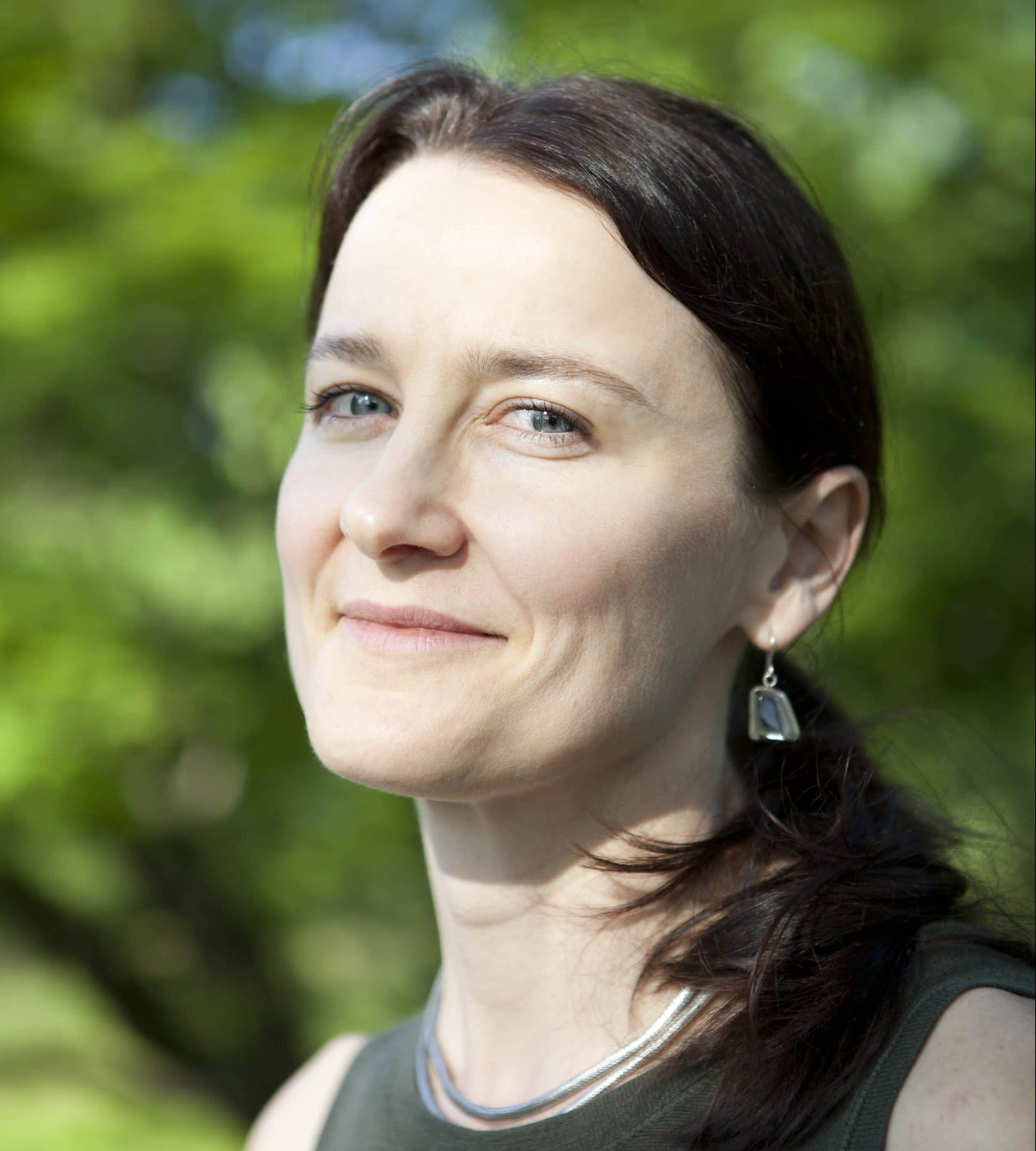
Joanna Trzeciak’s translations include Miracle Fair: Selected Poems of Wislawa Szymborska, winner of the Heldt Translation Prize. She lives in Cleveland, Ohio.
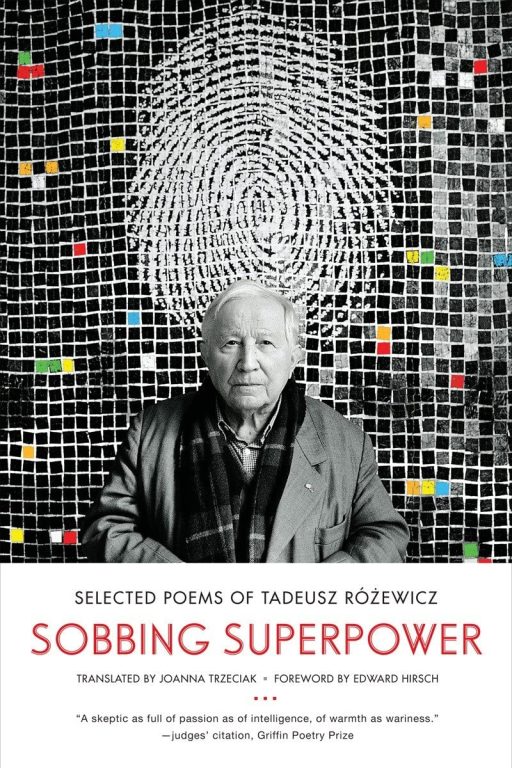
Judges’ Citation
Hearts can smart, and kindnesses be minded. Sobbing Superpower‘s world-class document, compellingly assembled by Joanna Trzeciak, gives us an EKG-cum-EEG for an entire era – its double helix inscribed by that most sensitive device…
Hearts can smart, and kindnesses be minded. Sobbing Superpower‘s world-class document, compellingly assembled by Joanna Trzeciak, gives us an EKG-cum-EEG for an entire era – its double helix inscribed by that most sensitive device: a soul the equal of the world’s occasion. A second global war had cast its blooming shade abroad, when Różewicz’s carouseling lovers sang, on fabulous beast-back, in scarlet carnivale: ‘let us adjust the paper ribbons and wreaths / crouch down: let hip touch hip / your thighs are alive / let us flee let us flee.’ But Różewicz is himself too alive to history’s evidence to pass off life and death as mutually exclusive: ‘Man is killed just like an animal / I’ve seen: / truckloads of chopped up people … // Concepts are only words: / … / truth and lie / beauty and ugliness / courage and cowardice. // … / I’ve seen: / a man-both / vicious and virtuous.’ The etymological job of the skeptic: to keep an eye on things. Różewicz is that rare character – skeptic as full of passion as of intelligence, of warmth as wariness. Thanks to Trzeciak’s deft, deferential translation, English readers see his place among stars of his Central-European generation – Herbert, Szymborska, Popa, Holub – poets who illustrate the power of a single plainsong to be heard over milling mobs; one sensibility to outweigh hours of broadcast nonsense; one oddball to resist the prefixed troopers; one poem’s power to outlast the props of all sub-supers, super-subs. Over 60 years, with grand themes but plain speech, with mortal passion but Heraclitic judgment, in torment and in tenderness, Różewicz proves as wary of philosophy’s bureaucracy as government’s; as wary of heaven’s offices as man’s. Alert to our condition’s own momentous momentariness, he’s funny, fierce, or casual; but never inconsequential.
Selected poems
by Joanna Trzeciak
When shadow falls
on my poem
I see light in it
faint stubborn
a life
tiny death
takes its first steps
matures quickly
grows
at night lies
on my heart
on my lips
like a sea chiseled
in black stone
you were screaming at night
dreadfully
frightfully
my wife says
it was death drilling corridors
within me a living being
death screaming within me
like a deserted cave
full of bones
When light falls
on my poem
I see death in it
a black grain
of ergot
in a golden head of wheat
which drifts off
beyond the horizon
September 1983
Copyright © English translation 2011 by Joanna Trzeciak
Chiaroscuro
the Polish written by Tadeusz Rózewicz
What sprouts out of the ashes of
Samuel Beckett?
somewhere in this space is
his fading breath
and then a motionless utterance
in the beginning was the word
in the end of the body
What decomposes? What suffers?
meat still full of love
spoils in time
stinks
one has to bury it
Copyright © English translation 2011 by Joanna Trzeciak
from Love Toward the Ashes
the Polish written by Tadeusz Rózewicz
Fallen
angels
look like
flakes of soot
abacuses
cabbage leaves
stuffed with black rice
hail
painted red
blue flames
with yellow tongues
fallen angels
look like
ants
moons wedged beneath
the green fingernails of the dead
angels in heaven
look like the inner thighs
of an underage girl
like stars
they shine in shameful places
they are pure like triangles and circles
with silence
inside them
fallen angels
are like the open windows of a morgue
like cows’ eyes
like the skeletons of birds
like falling planes
like flies on the lungs of fallen soldiers
like streaks of autumn rain
connecting lips with birds taking flight
over a woman’s palm
wander
a million angels
devoid of belly buttons
they type on sewing machines
long poems in the shape
of a white sail
their bodies can be grafted
onto the trunk of an olive tree
they sleep on ceilings
falling drop by drop
Copyright © English translation 2011 by Joanna Trzeciak
Homework Assignment on the Subject of Angels
the Polish written by Tadeusz Rózewicz
Where does evil come from?
what do you mean “where”
from a human being
always a human being
and only a human being
a human being is a work-related
accident
of nature
an error
if humankind
disentangles
itself
from flora and fauna
the earth will regain
its beauty and lustre
nature its purity
and innocence
human beings are the only beings
who use words
which can serve as tools of crime
words that lie
wound infect
evil does not come from an absence
or out of nothingness
evil comes from a human being
and only a human being
we differ in thought – as Kant said –
and for that matter in being
from pure Nature
Copyright © English translation 2011 by Joanna Trzeciak
Unde malum?
the Polish written by Tadeusz Rózewicz