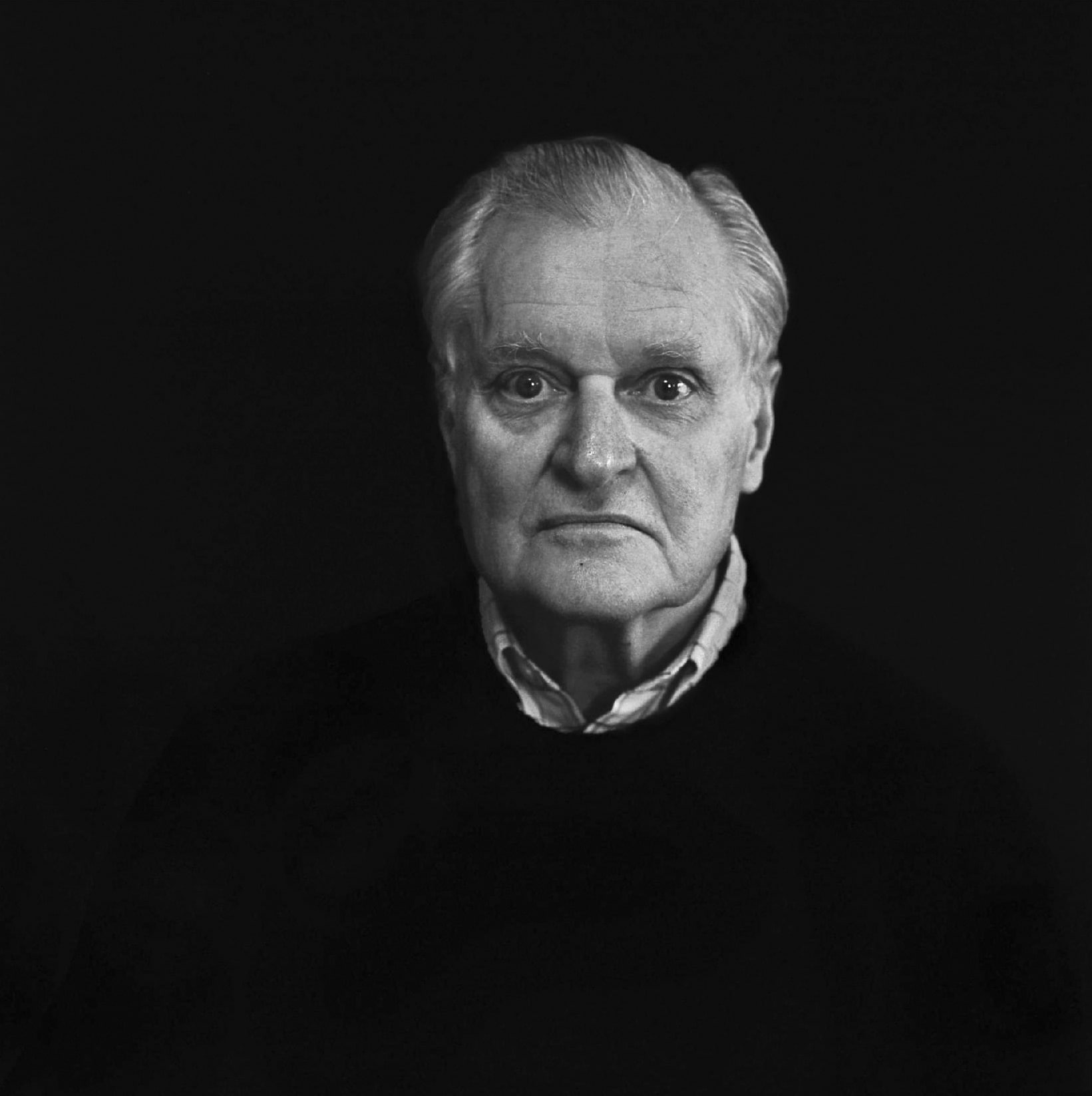
John Ashbery was born in Rochester, New York in 1927. Best known as a poet, he is the author of over 20 books of poetry including Some Trees, which was selected by W.H. Auden for the Yale Younger Poets Series and Self-Portrait in a Convex Mirror, which received the Pulitzer Prize for Poetry, the National Book Critics Circle Award and the National Book Award. He has served as executive editor of ARTnews magazine and as the art critic for New York and Newsweek magazines. A member of the American Academy of Arts and Letters and the American Academy of Arts and Sciences, Ashbery served as Chancellor of the Academy of American Poets from 1988 to 1999. He has received two Guggenheim Fellowships and was a MacArthur Fellow from 1985 to 1990. His work has been translated into more than 20 languages. John Ashbery lives in New York.
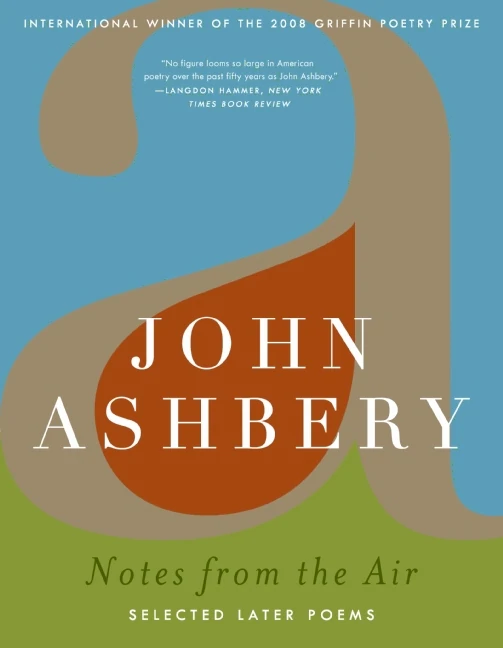
Judges’ Citation
The pleasure of reading John Ashbery’s poetry defies explanation.
Selected poems
by John Ashbery
It was a night for listening to Corelli, Geminiani
Or Manfredini. The tables had been set with beautiful white cloths
And bouquets of flowers. Outside the big glass windows
The rain drilled mercilessly into the rock garden, which made light
Of the whole thing. Both business and entertainment waited
With parted lips, because so much new way of being
With one’s emotion and keeping track of it at the same time
Had been silently expressed. Even the waiters were happy.
It was an example of how much one can grow lustily
Without fracturing the shell of coziness that surrounds us,
And all things as well. “We spend so much time
Trying to convince ourselves we’re happy that we don’t recognize
The real thing when it comes along,” the Disney official said.
He’s got a point, you must admit. If we followed nature
More closely we’d realize that, I mean really getting your face pressed
Into the muck and indecision of it. Then it’s as if
We grew out of our happiness, not the other way round, as is
Commonly supposed. We’re the characters in its novel,
And anybody who doubts that need only look out of the window
Past his or her own reflection, to the bright, patterned,
Timeless unofficial truth hanging around out there,
Waiting for the signal to be galvanized into a crowd scene,
Joyful or threatening, it doesn’t matter, so long as we know
It’s inside, here with us.
But people do change in life,
As well as in fiction. And what happens then? Is it because we think nobody’s
Listening that one day it comes, the urge to delete yourself,
“Take yourself out,” as they say? As though this could matter
Even to the concerned ones who crowd around,
Expressions of lightness and peace on their faces,
In which you play no part perhaps, but even so
Their happiness is for you, it’s your birthday, and even
When the balloons and fudge get tangled with extraneous
Good wishes from everywhere, it is, I believe, made to order
For your questioning stance and that impression
Left on the inside of your pleasure by some bivalve
With which you have been identified. Sure,
Nothing is ever perfect enough, but that’s part of how it fits
The mixed bag
Of leftover character traits that used to be part of you
Before the change was performed
And of all those acquaintances bursting with vigor and
Humor, as though they wanted to call you down
Into closeness, not for being close, or snug, or whatever,
But because they believe you were made to fit this unique
And valuable situation whose lid is rising, totally
Into the morning-glory-colored future. Remember, don’t throw away
The quadrant of unused situations just because they’re here:
They may not always be, and you haven’t finished looking
Through them all yet. So much that happens happens in small ways
That someone was going to get around to tabulate, and then never did,
Yet it all bespeaks freshness, clarity and an even motor drive
To coax us out of sleep and start us wondering what the new round
Of impressions and salutations is going to leave in its wake
This time. And the form, the precepts, are yours to dispose of as you will,
As the ocean makes grasses, and in doing so refurbishes a lighthouse
On a distant hill, or else lets the whole picture slip into foam.
Copyright © 2007 by John Ashbery
Someone You Have Seen Before
As one turns to one in a dream
smiling like a bell that has just
stopped tolling, hold out a book
and speaks: “All the vulgarity
of time, from the Stone Age
to our present, with its noodle parlors
and token resistance, is as a life
to the life that is given you. Wear it,”
so must one descend from checkered heights
that are our friends, needlessly
rehearsing what we will say
as a common light bathes us,
a common fiction reverberates as we pass
to the celebration. Originally
we weren’t going to leave home. But made bold
somehow by the rain we put our best foot forward.
Now it’s years after that. It
isn’t possible to be young anymore.
Yet the tree treats me like a brute friend;
my own shoes have scarred the walk I’ve taken.
Copyright © 2007 by John Ashbery