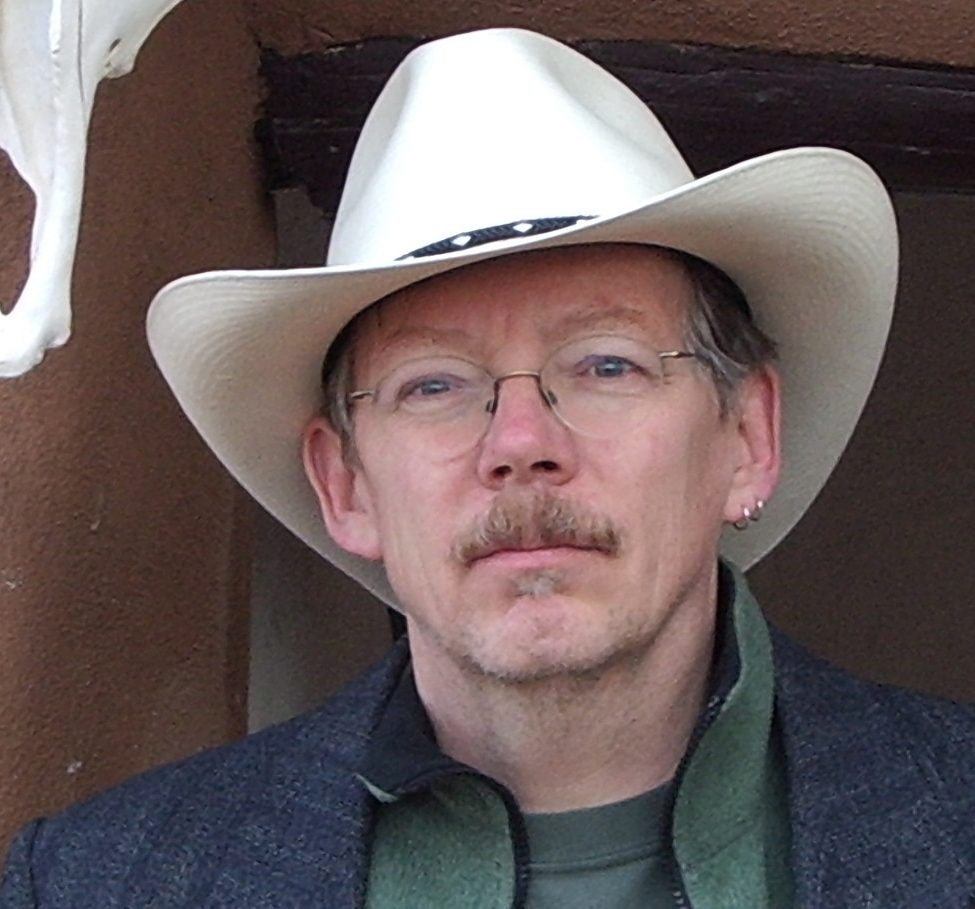
Phil Hall’s first small book, Eighteen Poems, was published by Cyanamid, the Canadian mining company, in Mexico City, in 1973. Among his many titles are: Old Enemy Juice (1988), The Unsaid (1992), and Hearthedral – A Folk-Hermetic (1996). In the early 80s, Phil was a member of the Vancouver Industrial Writers’ Union, and also a member of the Vancouver Men Against Rape Collective. He has taught writing at York University, Ryerson University, Seneca College, George Brown College, and elsewhere. He has been poet-in-residence at Sage Hill Writing Experience (Saskatchewan), The Pierre Berton House (Dawson City, Yukon), and elsewhere. Hall also currently works as a poetry manuscript midwife, a distance program offered by the Toronto New School of Writing. In 2007, BookThug published Phil’s long poem, White Porcupine. Also in 2007. he and his wife, Ann, walked the Camino de Santiago de Compostela. He is a member of the Writers’ Union of Canada, and lives near Perth, Ontario. Recent books include An Oak Hunch (shortlisted for the Griffin Poetry Prize in 2006) and The Little Seamstress. In 2011, he won Canada’s Governor General’s Award for Poetry for his most recent collection, Killdeer, a work the jury called “a masterly modulation of the elegiac through poetic time.”
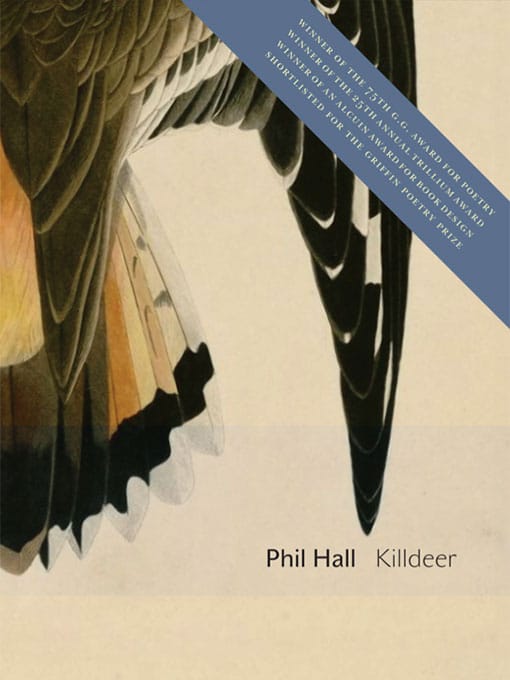
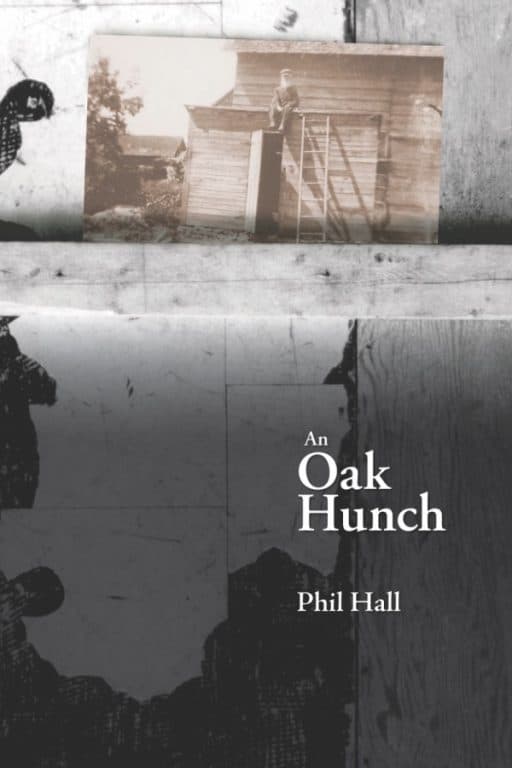
- 2012
- 2006
Judges’ Citation
These are poems of ferocity and humility, of vulnerability and wit, poems whose skilled complexities elucidate the lyric disturbance of melody, memory and self.
Judges’ Citation
Straddling the thin line between argument and lyric, the ‘Essay-Poems’ of Killdeer are deceptively prosodic, and can switch from the stark and factual to short flights of startling, gorgeous lyricism…
Selected poems
by Phil Hall
When I can’t sleep – when I’m sick – when no one else is home – when I’m lost in transit – I tinker
This is my word for what I do – a slow – un-clever – tactile – cheap – harmless rearranging of odd bits of my nature & gatherings – until they sing – off-key
I tinker at long sequences – & stay close to notebooks – mostly when no one is looking
Am increasingly filled with hopelessness – but sometimes when I’m up to my elbows in a line’s perplexities
Confidence lands its flocks upon me & I feel – inside the poem – unafraid
Copyright © 2011 Phil Hall
from A Thin Plea
& coming toward us out of the fog
is the uncoupled next train of everyone
southbound to the U.S. tonight
we can run into the cornfield
the so many stones of us lunging
the so many hands of us clear
popping the sockets of the dry stalks
until it seems the fog has bones
that are pioneer documents
being shredded & then absorbed
into the fog we are gulping
as we turn to listen to the lengthened roar
think of all the times over the years
we have noticed our own reflections in windows
& looked away or through ourselves
at what is really there
a stack of transparencies
the stills of an animated short
two cadavers named Adam & Eve
our first & last selves – frozen
we dyed their insides orange & blue
thinly sliced them crown to heel
& photographed each slice
sped up in sequence
the body comes at us like art
as we hurtle through
listen to them all back there
crying to be prized free
from the blown rust dahlias
of the tail lights in the fog & the high beams
screening wide against cotton-batting
soon we will hear the local sirens
& scream to be casualties among them
Copyright © Phil Hall, 2005