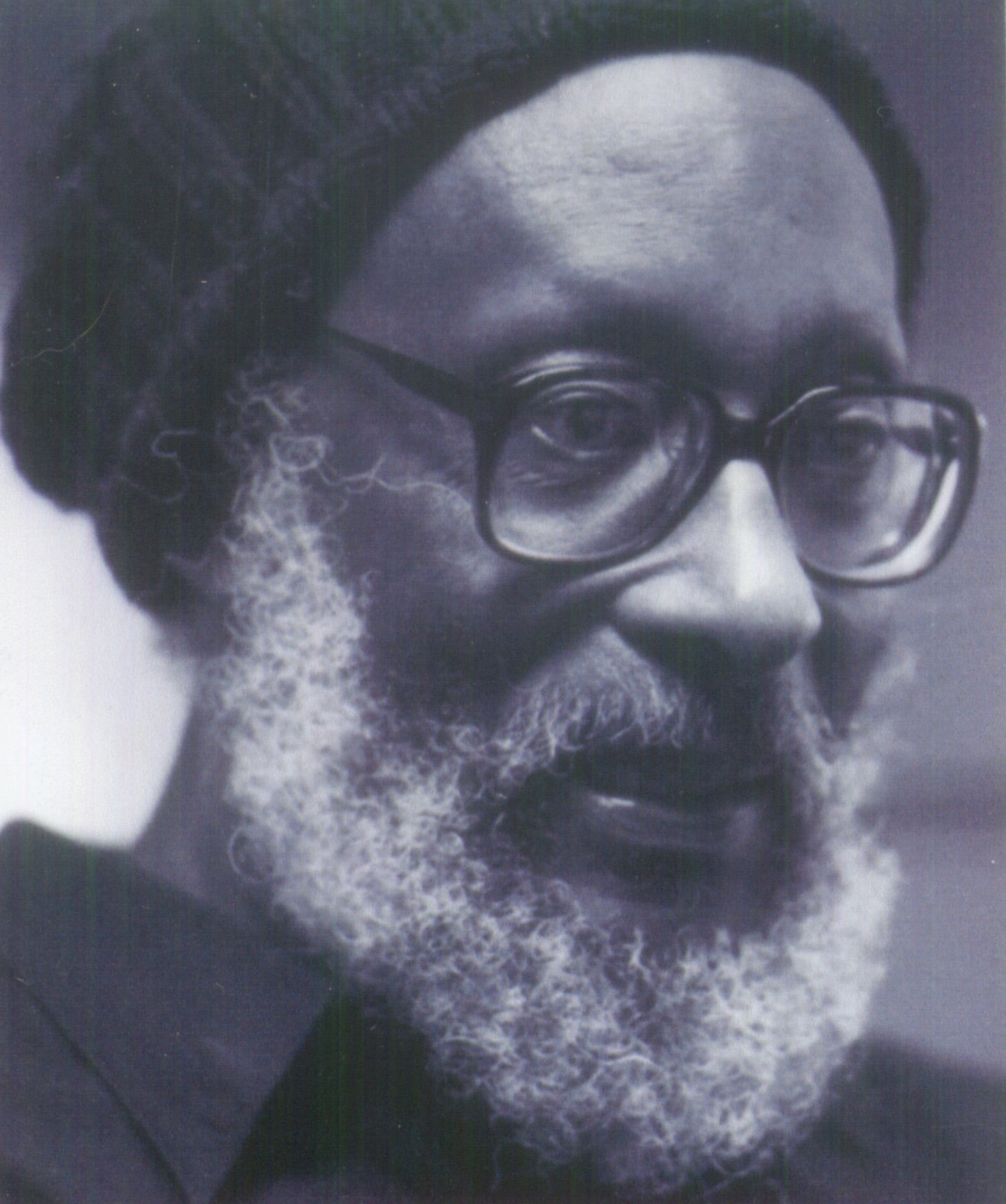
Kamau Brathwaite, born in Barbados in 1930, is an internationally celebrated poet, performer, and cultural theorist. Co-founder of the Caribbean Artists Movement, he was educated at Pembroke College, Cambridge and has a PhD from the University of Sussex in the UK. He has served on the board of directors of UNESCO’s History of Mankind project since 1979, and as cultural advisor to the government of Barbados from 1975-1979 and again since 1990. Brathwaite has received numerous awards, among them the Neustadt International Prize for Literature, the Bussa Award, the Casa de las Américas Prize, and the Charity Randall Prize for Performance and Written Poetry. He has received Guggenheim and Fulbright fellowships, among many others. His book, The Zea Mexican Diary (1992) was The Village Voice Book of the Year. Brathwaite has authored many works, including Middle Passages (1994), Ancestors (2001) and The Development of Creole Society, 1770-1820 (2005).
Over the years, he has worked in the Ministry of Education in Ghana and taught at the University of the West Indies, Southern Illinois University, the University of Nairobi, Boston University, Holy Cross College, Yale University and was a visiting fellow at Harvard University. Brathwaite is currently a professor of comparative literature at New York University. He divides his time between CowPastor, Barbados and New York City.
We were saddened to learn of Kamau Brathwaite’s passing in February, 2020. As tributes pour in acknowledging Brathwaite, his work and his accomplishments, Barbados Today offers these moving reflections.
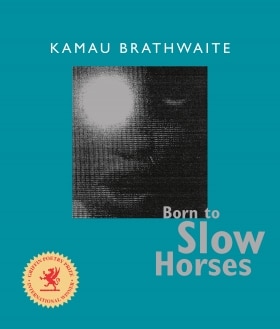
Judges’ Citation
To read Kamau Brathwaite is to enter into an entire world of human histories and natural histories, beautiful landscapes and their destruction, children’s street songs, high lyricism, court documents, personal letters, literary criticism, sacred rites, eroticism and violence, the dead and the undead, confession and reportage.
Selected poems
by Kamau Brathwaite
And so this foreday morning w/out light or choice
i cannot swim
the stone, i can’t hold on to water, so i drown
i swallow left, i turn & fall-
ow into fear & blight, a night so deep it make you turn
& weep the line of spiders of yr future you see spinn-
ing here, their silver
voice of tears, their lid. less jewel eyes .
all thru this buffeting eternity i toss i burn
and when i rise leviathan from the deep . black shining from my skin
of seals, blask tooth, less pebbles mine the shore
haunted by dust & bromes . wrist, watches w/out tone or tides, communion
w/out broken
hands, x-
plosions of frustration, the trans-
substantiation of the sweat
of hate, the absent ruby lips
upon the wrinkle rim
of wine . i wake to tick
to tell you that in these loud waters of my land
there is no root no hope no cloud no dream no sail canoe or dang, le miracle .
good day cannot repay bad night. our teeth snarl snapp-
ing even at halp-
less angels’ evenings’ meetings’ melting steel
in this new farmer garden of the earth’s delights
this staggering stranger of injustices
come rumbelling down the wheel and grave-
yard of the wind, down the scythe narrow streets, clear
air for a moment. clear
innocence whe we are running. so so so so so many. the crowd flow-
to tell you that in these loud waters of my land there is no root no hope no cloud no dream no sail canoe or dang, le miracle . good day cannot repay bad night. our teeth snarl snapp- ing even at halp- less angels’ evenings’ meetings’ melting steel in this new farmer garden of the earth’s delights this staggering stranger of injustices come rumbelling down the wheel and grave- yard of the wind, down the scythe narrow streets, clear air for a moment. clear innocence whe we are running. so so so so so many. the crowd flow-
ing over Brooklyn Bridge. so so so many . i had not thought death
had undone so many melting away into what is now sighing . light
calp from the clear avenue forever
our souls sometimes far out ahead already of our surfaces
and our life looking back
salt. as in Bhuj. in Grenada. Guernica. Amritsar. Tajikistan
the sulphur-stricken cities of the plains of Aetna. Pelée, ab Napoli & Krakatoa
the young window-widow baby-mothers of the prostitutes .
looking back looking back as in Bosnia, the Sudan. Chernobyl
Oaxaca terremoto incomprehende. al’fata el Jenin. the Bhopal
babies sucking toxic milk, our growing heavy furry tongues
accustom to the what-is-the-word-that-is-not-here-in-English beyond ashadenfreude
not at all like fado or duende
Copyright © 2005 by Kamau Brathwaite, Born to Slow Horses, Wesleyan University Press
from “Hawk”
the 21 days
on the first day
of yr death it is quiet it is dormant like a doormat
no one-foot touch its welcome. its dust on the floor
is not disturb nor are the sleeping spirits of this house
i sit here in this chair trying to unravel Time so that it wouldn’t happen twine
on the second day
of yr death. i break a small
bread
i can still smell the sweet flour of yr firstborn flesh
on the third day
of yr death. the water in my urine turn to blood
i cover the waterfront of the mirror w/a blue cloth where yr face stood
on the fourth day
yu shd be rising. knocking at the door of
darkness. coming back to me
i do not hear yr call
on the fifth day
after yr death. a young white rooster. white white white feathery & shining tail & tall
neigbour of sound from miles away in the next village
stands in the yard & from his red crown crows & crows & will not go away
he struts round to the back-a-wall
his one eye clicking as he crows
comes to the glissen of my window & he crows
loud like the overflowing voice of my Trelawny waterfall
on the sixth day
after yr death. there is this silence of flowers
their petals say their shining needs
soft water needs
sweet showers needs
sweet rain from heaven
•
i see them once again inside the chapel of my funeral
on the seventh day
after yr death. the yellow flour
in the cup-cakes in the kitchen have gone sour
there is an eye of rancid in the middle of their meal
i am unhappy like the wind & tides are restless rivers
i can’t find you. i can’t find you. i cannot cannot cannot be console to dreams
the mad dogs of the pasture kill the cock & pillage
it. madwoman wind is scattering white screaming feathers’ petals’ pedals over all
the brunt and burnin ochre-colour land
on the eiate day
after yr death
me do nothin. nothin. nothin . i cdn’t even get yr inglish ‘eighth’ spelt streight
on the nine / ff night
yu rise again from off the dead
•
i see you now & at the hour of yr o not soff not soffly dead
it is my pain it is my privilege . it is my own torn flesh torn fresh
o let me comfort us my chile . is not yr heart is broken
on this tenth day
i haffe go down to the Station today to find out
what they doin about yr det. about the ‘accident’
dem call it. bout the black-hearted man who a-kill
yu. an whe dem hide yu body
and po. lice who dealin w/ this case they cannot look me in the lips
and No One kno
whe the boy is or gone or when he will come-back
ten time dis ten dem mek me up & down & book & fourt
to fine my sun. an ten ten time dem ave no ansa for me for me for me
in dis dry-weatha tunda
dem seh because i poor & have no book to haul-out
inside dis station. an i inn got no song
to sing becau i colour in dis Marcus Garvey country proud an strong
an wrong – yu sun gone out & still you colour wrong.
inn got no i say song
i wonda whe Port Royal is. when de eart goin again goin crack
my daughta Ingriid walk beside me hurt
an strong an dress in black
her face inside she face int mekkin sport
on the tenth night after a long long distance silence
i born into this world w/ nothing but my breath & my bare back an hornets
in my chess
now i will haffe doubt if god is good & black & honesty
wha good good do fe me?
whe god dat cricket midnight criminal when Mark of god get call like dat & kill
Mark cyaan dead so if good. if god
my breath give birt to good like god
my sun dis gold is all my riches that cannot be replace
an suddenly me cannot fine him in dis place before dis good god face to face
wha good fe god. no god. what good. wha god. no god
if good Mark have no face to face dis god inside dis good god place
on the eleventh day after he dead
[Silence]
on the twelfth day
after yr debt – o pickney – it is as if me cyaaan wake up
Time has been drain from all my clocks. the sky is overcyas & lock
altho it isn’t rainin yet
[Silence]
this night we hold our wake. watch w/ the spirit of my sum before his daily funeral
. people cook food bring bread & drink & there’s some singing
of the old traditions by the older folks & country citizens
but they soon fall to arguing and they soon fall down to quarrellin
about the words the phrases time & tempo of these sookey tunes
it seem they isolated in the old traditions in these coffee hills
[poem continues in Born to Slow Horses]
Please note: This poem appears with different fonts in the original collection.
Copyright © 2005 by Kamau Brathwaite, Born to Slow Horses, Wesleyan University Press