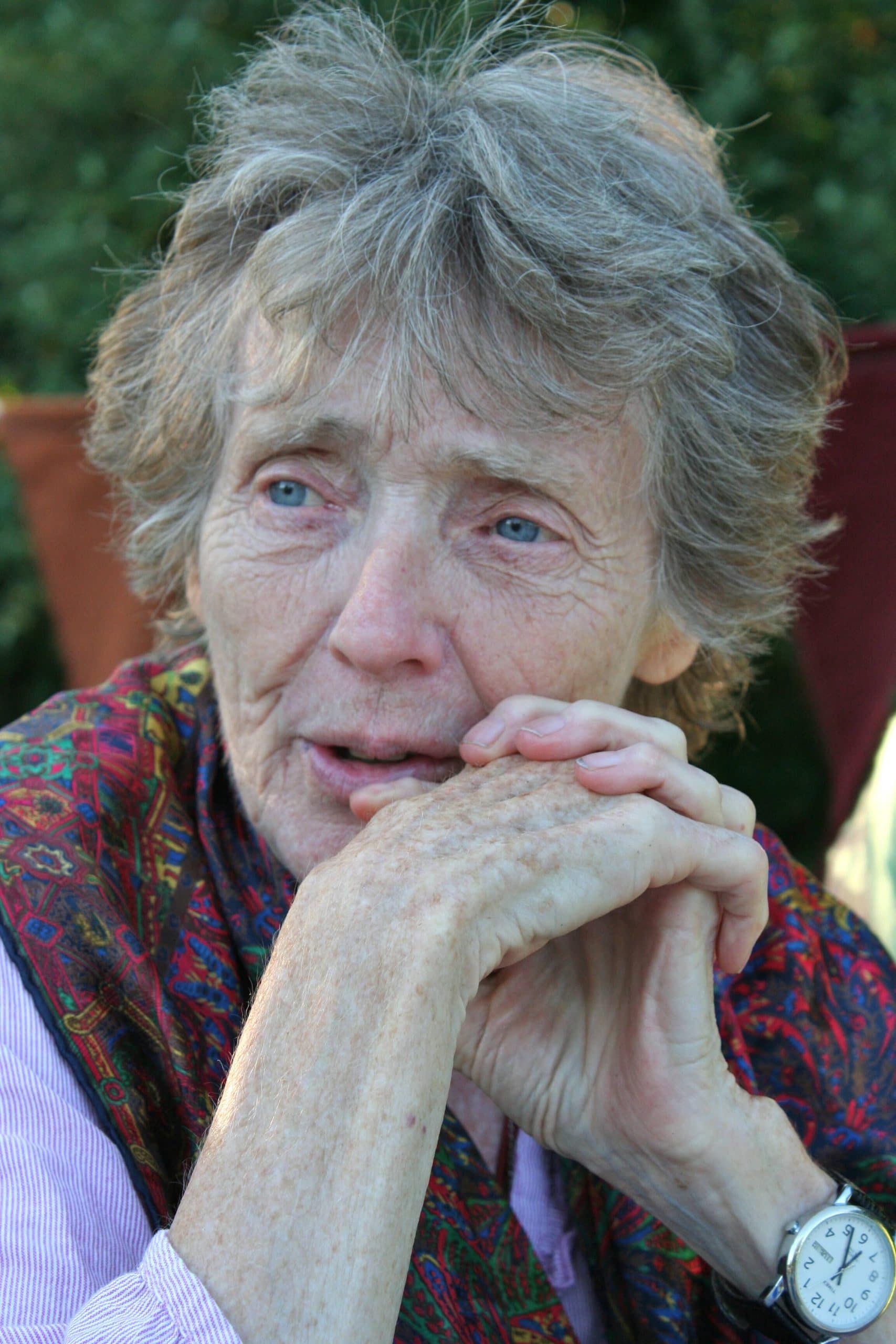
Fanny Howe is the author of over twenty books of poetry and prose including Gone: Poems (2003), Selected Poems (2000), Forged (1999), One Crossed Out (1997), O’Clock (1995), The End (1992), For Erato; The Meaning of Life (1984), Alsace-Lorraine (1982) and Poem from a Single Pallet (1980). The recipient of the 2002 Lenore Marshall Poetry Prize for Selected Poems (2000), she has also won awards from the National Endowment for the Arts, the National Poetry Foundation, the California Council for the Arts and the Village Voice, as well as fellowships from the Bunting Institute and the MacArthur Colony. Howe was shortlisted for the Griffin Poetry Prize in 2001.
Born in Buffalo New York in 1940, Howe is a prolific poet, novelist and essayist who has won multiple awards for her collections of poetry and novels for young adults. A creative writing teacher of note, Howe has lectured at Tufts University, Emerson College, Columbia University, Yale University and the Massachusetts Institute of Technology. She is Professor Emerita of Writing and Literature at the University of California, San Diego.
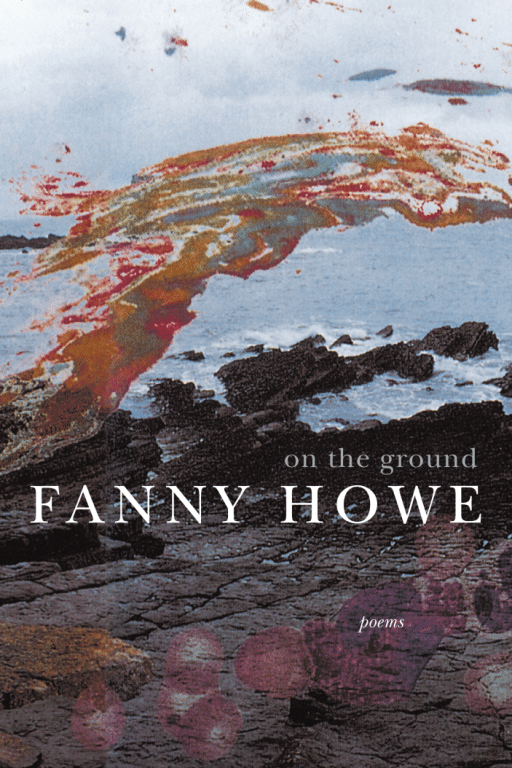
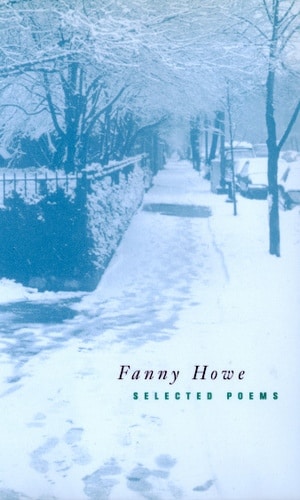
- 2005
- 2001
Judges’ Citation
Fanny Howe’s lyric meditations on matter and spirit, the soul exiled, and the wondrous strangeness of human life on earth are akin to Dickinson’s in their fierce wit, musicality and intelligence.
Fanny Howe’s lyric meditations on matter and spirit, the soul exiled, and the wondrous strangeness of human life on earth are akin to Dickinson’s in their fierce wit, musicality and intelligence. Gathered from nine of her books spanning more than two decades, these poems articulate the inquisitive grace and courage of a secular contemplative, restoring to language its power to question the sacred in the interests of corporeal joy.
Judges’ Citation
These are startling, beautiful, challenging poems that work within the troubled and chafed borders and interfacings between spirit and material world to ask that basic question: how can we live?
These are startling, beautiful, challenging poems that work within the troubled and chafed borders and interfacings between spirit and material world to ask that basic question: how can we live? How can we be ordinary with each other (so necessary) in these times of war and political terror that try to keep our lives in a ‘state of exception’ that seems to justify cruelty? Howe’s poems are firmly on the ground but not grounded; they use lyric energy and phrasings in new ways that are deft, open, and have synaptic intelligence. Here, poetic transport is not transcendent, not consolation; it is earth-bound, immediate and enamoured. This is a book that teaches us to be ecstatic about poetry; in it we hear the frayed and difficult passages of our thought and place as humans, our restive worry and our longing for peaceful cohabitation with all others. On the Ground is an essential book for our times.
Selected poems
by Fanny Howe
I won’t be able to write from the grave
so let me tell you what I love:
oil, vinegar, salt, lettuce, brown bread, butter,
cheese and wine, a windy day, a fireplace,
the children nearby, poems and songs,
a friend sleeping in my bed—
and the short northern nights.
Copyright © 2000
[I won’t be able to write from the grave]
I’d speak if I wasn’t afraid of inhaling
A memory I want to forget
Like I trusted the world which wasn’t mine
The hollyhock in the tall vase is wide awake
And feelings are only overcome by fleeing
To their opposite. Moisture and dirt
Have entered the space between threshold and floor
A lot is my estimate when I step on it
Sorrow can be a home to stand on so
And see far to: another earth, a place I might know
Copyright © 2000, Fanny Howe, Selected Poems, University of California Press
[I’d speak if I wasn’t afraid of inhaling]
The first person is an existentialist
like trash in the groin of the sand dunes
like a brown cardboard home beside a dam
like seeing like things the same
between Death Valley and the desert of Paran
An earthquake a turret with arms and legs
The second person is the beloved
like winners taking the hit
like looking down on Utah as if
it was Saudi Arabia or Pakistan
like war-planes out of Miramar
like a split cult a jolt of coke New York
like Mexico in its deep beige couplets
like this, like that … like Call us all It
Thou It. “Sky to Spirit! Call us all It!”
The third person is a materialist.
Copyright © 2004 by Fanny Howe
9/11
I may never see the Vatican or Troy
but only let me sit in a car somewhere
I recognize as home by the hand
of the one I love in mine-
just once – O universe – one more time
Copyright © 2000 the Regents of the University of California
from Lines Out to Silence
Not a rink but ashed-over ice
Rain on a windshield, a green light
Apartments made of dirt, neon
hangers outlined in the cleaner’s window
I think proximity is the abyss
between God and us because
every fabric of my body is trying
to know why saying
I love you
in a time of extremity is a necessity
Copyright © 2004 by Fanny Howe
from On the Ground
I have seen it happen
A face with fangs and gills
represents history and an angel
is beating the beast on the back
Both are made of marble
One is a dragon
Its head is flat
like the iron tanks
in muddy water
that drove the men into the Gulf of Tonkin.
…
In my experience
the angel with his wings up
is trying to kill the dragon of history
to prove that air
is stronger than the objects in it
and if he wasn’t made of stone, he would.
Copyright © 2004 by Fanny Howe
from The Dragon of History
Satan fell behind, it was a taxi’s shadow
where Man put his foot on the sidewalk
His mouth covered mine and he was gone
Italo once said a kiss on the mouth is the sign of betrayal
and pointed at Judas in the painting
(his muscular hand, his brush)
There was an ache in the canvas he had speared himself
That was the day when rain fell until twelve
outside the studio and twelve months before that shadow
Not a rink but ashed-over ice
Rain on a windshield, a green light
Apartments made of dirt, neon
hangers outlined in the cleaner’s window
I think proximity is the abyss
between God and us because
every fabric of my body is trying
to know why saying
I love you
in a time of extremity is a necessity
Dreams before waking are eyes into the future
where there is no Zurich but an alphabet
beginning with z
so go away before I ask to know
what you mean about wanting to go
Terrified of being first?
of being dirt?
Of being ambushed or embossed? Personally
I want to batter my way out of this cage of psychology
and get to the longing I really know about
Morning dusk — his figure furry
Threads of gray hair
and outside, a world without a leader
Oil and land mines
Lonely words scurrying to work
If the dark bricks hide criminal life
so does each body
dedicated to maintaining power
by suppressing its delights
Inside this egg the walls are lacquered blue
Creamy tones of windowsill
and slat. Dawn from hell on up
I hear a rooster deny, deny, deny
or is it Man
Lies smell in every detail
as the light increases in this shell
Maybe the end of the world happened long ago
A whirl as quick as Judas breaking his neck
and every sound is an echo
Poor love in the order of existence
subsists on passivity inside this skin
where pain has cut a pattern
and a red heart’s a little devil
speared by its own hand
and the brain of this stranger —
is it mine or its own — and its skeleton?
Can I toss them aside
like an armful of sticks and set out as a feeling
to find Hana and Issa across the night
Happiness has become unbearable
so don’t stay with me
Ilona said this from the hall
Doors are here for both ways of walking
The split bed and bodies facing
where two unanimities
make a positive zero
She was hoping to die into Hans
so I left her house
I thought I was happy and said to my friend
It’s because we are together
The blushing hills were rusty
its nerves as icy as his sleeves
Doll’s hair, snow like artificial
Elimination of detail, a day to be grateful
He had broken parole
With speed-thinning strides
a horse passed by without a saddle
A body never forgets
The lens is turned on its own tremendum
Only blocks away — tubes, needles, straps
at the physician’s prison
No sign of reflection, just blood and bone
trying to incorporate meds into atoms
When the body escapes without identification
this is its identification:
Chunks of moonstone smoothing a curb
Honey night snow in the city
She swept up my hair from the linoleum floor
and shook out the sheet
A rouge along the shades and drinks to be drunk
In transit, in transit, in stations and camps
little white spots wobbled from wall to phone
Star-lashes batted
— it was truck lights exiting the pike
and other war zones
Farther wars report on us:
an arsenal of artworks and theories
that contribute to the power of the military
“Beware of the fruits of your labor!”
My father was a soldier
who was smaller than my son
when he returned as a ghost.
I begged him to stay with us
but he said: “Not until you come to life.”
Copyright © 2004 by Fanny Howe, On the Ground, Graywolf Press
On the Ground
The monk is a single
and so am I
but which kind?
All of them
from young to wild
and the boyish one
(mine) cared for the weak
until there was no one
to care for him
besides an old woman
who lived as a she.
I became a penitent
sequentially:
first in sandals
then in boots
then with a hood
and bare feet.
Now night-bound, now nude, then old.
·•·
Another brother and I took a train with a view of mountains
floating in water
out of Limerick Junction
to Heuston Station where Wittgenstein
tried to discover emotion.
He hit a horizon.
“Philosophy should only be written as poetry.”
·•·
In a Sabbath atmosphere you stand still and look backwards
for time has ceased its labors
and no cattle tremble.
You can contemplate the peripheries
and for a flash see the future as a field in a semi-circle.
Everything is even on the Sabbath. The died and the living.
Each person or place wants you as much as you want another.
·•·
Towards a just
and invisible image
behind each word
and its place in a sentence
we must have been sailing.
Scarcely defended, best
when lost from wanting perfect sense.
But still, recognizable.
Be like grass, the phantom told us:
lie flat, spring up.
Our veils were scrolls
you couldn’t walk into
but only mark the folds.
·•·
I’ve lost my child at the bend where we parted.
We will never come back to that hour.
Let me write about the place again the path so sandy
and the table cloth blowing in a wind from Newfoundland.
It was here it began. She left her bouillabaisse untouched
and headed out on the train.
Sort of, soft, gold at sunset, turrets and sandals
were hard to identify so many copies.
Let me concentrate on ancestral faces
and I will recognize hers
before my powers fail and our DNA has been smeared
on cups and cigarettes, bottles and gloves, bowls and spoons
and replicated, sucked or kissed into the lips of strangers.
·•·
I have to pass through the estuary
to investigate breakdown as a trail of nerve-endings
at the beginning of everything.
Scrapes like threads seeking holes.
It’s a strange textile that serves as a road map.
This one did:
its blue led to the edge.
Where could a fabric begin and end except as a running woman
who sews and passes it along?
So I ran with it in my hands.
A kind of eucharist.
No break in its material from the first day on earth
to the Sabbath where all are equal
and the cows covered in sackcloth.
·•·
Where has my mind gone?
The bloody thieves
are very quick.
You may have noticed I’m naked
and sliced by glass.
Soon words will be disappeared
and then the Celtic church
and seven friends
I will not name.
One word that contains
so many:
dearth, end, earth, ear, dirt, hen, red, dish, it and
I must examine each part
then cut the ropes without a heart and set out.
·•·
The slide downhill on my back to a ledge
and the sea out there and a city
to the left of the mud.
The place they call an area
preparing for an earthquake. Under-shade and crowds
of hungry old people lining for bread.
One woman collapsed on her side
and another helped her up
and I was let into the bunker
by the best kind of communist.
There was orange vomit on a large cape over a large woman.
The hills! No bells.
I went down for what reason.
Not to enter a cell.
Luckily no one was white.
We discovered we were in a loft space from the olden days
that I indicated pleased me.
because I couldn’t get my body out no matter what.
I paused long enough to encounter
a slender elder with the delicate posture of a Rastafarian.
The people were indifferent as they are to whites but polite.
The lean man showed me the door in colorful clothing.
But there was a huge blast from the building beside us
And we ran up rickety stairs to look at what
was now a structure speared with broken glass and stone.
A worker was already being transported on a stretcher.
We looked around at the mess then went inside to discuss
our love of failures, every one of us.
·•·
I hauled so many children after me
with ropes and spears and nets
like sea-creatures that others would eat
without them I have no purpose.
As in the Gospel account, I believed in their belief.
But now there would be what? For he, the little one,
was kneeling and saying, You must run.
The lover I still loved stayed near the door
so I raced off, you stood, when the police came
seeking coherence in everything.
The total machine of retribution presses on.
Regardless of a prayer or what a person did.
This is incredible.
We’re breaking up.
·•·
A Trappist led me around as one of him
to a ship heading for the country where they edit the best films.
There was a city on deck: residential with pleasing evening trees
and then a downtown area until we couldn’t tell the suns
from the portholes on board.
The ship would transport us to a staging dock in Iona.
I would lose my luggage from the twentieth century
(though its particles and buckles were forged in eternity)
and make my private vows to the creator
in every theater we entered.
·•·
Together we traveled in a boat as it filled with night-water
from the bottom up.
By night-water one means fear.
So the refilling is adding a sting to the salt.
Living naked
still leaves you covered
by a surface of wood, feathers, fur or skin.
Bare skin, blue skin: a muff of lambskin
over the ears where the thief can get in.
It’s lucky the mind freezes before the heart.
·•·
Back there is the string of mountains your uncle painted
and you lost. Out there is the clotted cream
on a raspberry tart that he couldn’t finish.
There is the goose and the blackbird, the brindled donkey
and the trap. They stand on the thin black thread of your lineage.
Your scissors are split, your fiddle is cracked, its strings are thin
and your mouth is dry, your clothes American.
No more rush of notes as if a window is open inside.
Only if you are insane or asleep
and the gods and animals
pound their way in
on a divine night wind.
Copyright © 2014 by Fanny Howe, Second Childhood, Graywolf Press