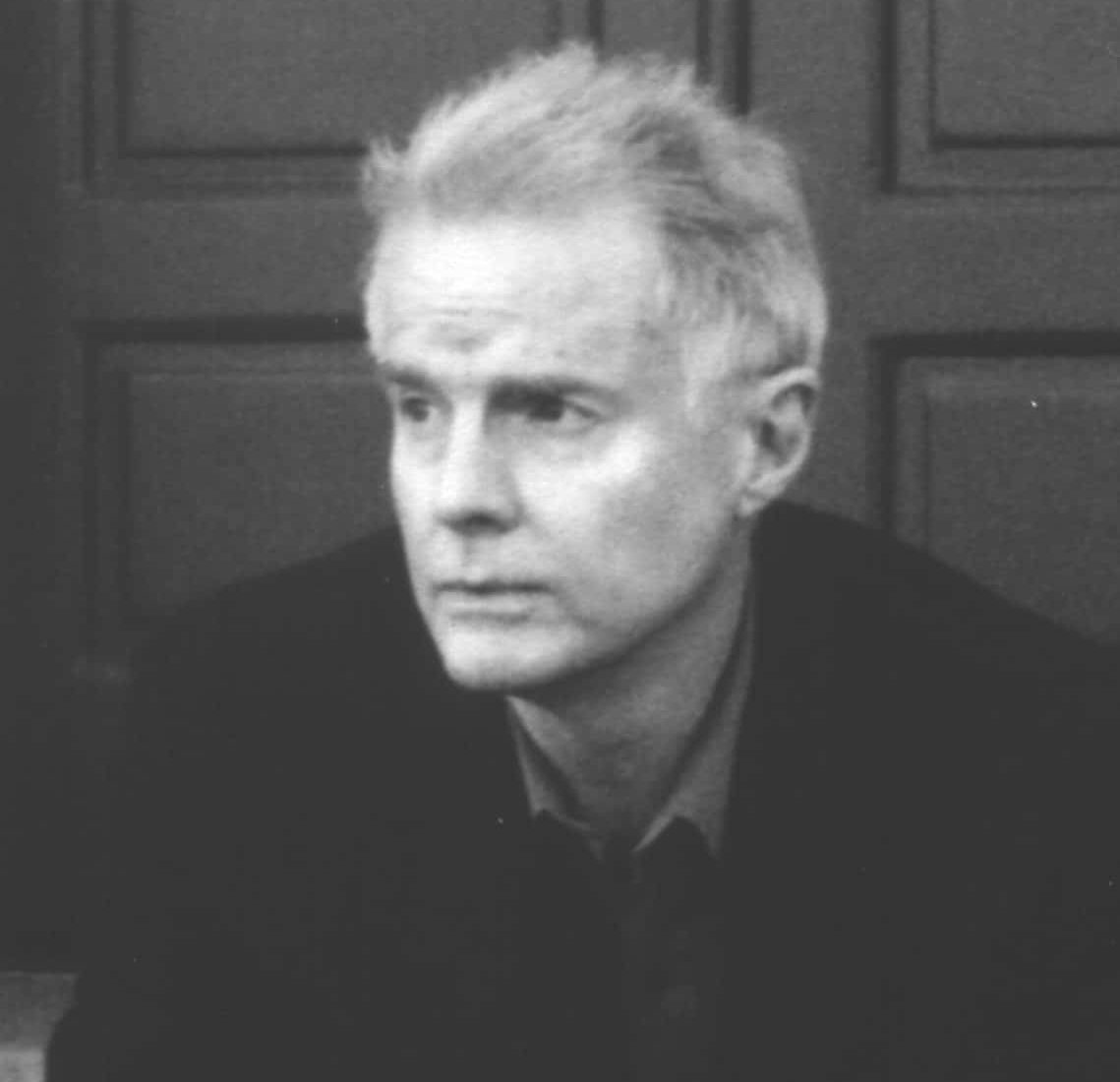
David Kirby has received many honors for his work, including the Brittingham Prize in Poetry and citations in Best American Poetry 2000 and 2001, and Pushcart Prize XXV. He has been awarded a Guggenheim Fellowship and grants from the National Endowment for the Arts and Florida Arts Council. Kirby is the author or co-author of twenty-two books, including the poetry collections The Ha-Ha, The House of Blue Light, and The Traveling Library in addition to a collection of essays, What Is a Book? His most recent volume, The House on Boulevard St.: New and Selected Poems, is shortlisted for the National Book Award. His verse has appeared in such publications as the Kenyon Review, Southern Review, and Ploughshares. A member of the National Book Critics Circle, Kirby also writes regularly for the New York Times Book Review, the Atlanta Journal-Constitution, and the San Francisco Chronicle.
Kirby received his bachelor’s degree in English from Louisiana State University and his doctoral degree in English from Johns Hopkins University in 1969. He is Robert O. Lawton Distinguished Professor of English at Florida State University, where he has taught since 1969 and lives in Tallahassee.
See also: Griffin Trustee Robin Robertson, Griffin Poetry Prize 2004 shortlisted poets Leslie Greentree and David Kirby, and Griffin Poetry Prize 2003 shortlisted poet Gerald Stern were joined by the 2005 Canadian and International winners Roo Borson and Charles Simic on a triumphal tour to the Dublin Writers Festival in June, 2005. Leslie, David and Roo kept a lively blog of the trip, which you can read here.
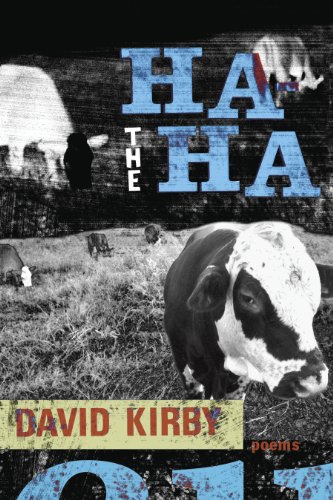
Judges’ Citation
David Kirby’s illusionistic poetics are like a ha-ha, – which is not a joke but a landscape trick – used to keep cows at a picturesque distance from the manor house.
David Kirby’s illusionistic poetics are like a ha-ha, – which is not a joke but a landscape trick – used to keep cows at a picturesque distance from the manor house. The formal appearance of this poet’s stanzaic patterns – so chaste and well-behaved and structurally deft – support the genial but disruptive spirit of these narrative performances. Talk, talk, talk about travel, food, more food, art, architecture, Barbara, more Barbara, mother, nuns, Rotarians, Americans, more Americans, etc., little operas with recitative. The Ha-Ha is funny and sad, colloquial and learned, and full of wry self-observation and social profundities. The poems are accompanied here and there by photographs of a large cow who is not laughing.
Selected poems
by David Kirby
The three things Americans visiting Italy worry about most
are (1) being cheated, (2) being made to eat something
they don’t like, and (3) being cheated in the course
of being made to eat something they don’t like.
To these people, I say: Americans, do not worry.
Italians will not cheat you. Dishonesty requires calculation,
and Italians are no fonder of calculation than we are.
As for the food, remember that you are in a restaurant,
for Christ’s sake, and therefore it is highly unlikely
that your handsome, attentive waiter will bring you
a bunch of boiled fish heads, much less a bowl of hairspray soup
or a slice of tobacco pie topped with booger ice cream.
Indeed, you have already been both cheated and made to eat
bad food in your so-called Italian restaurant in Dearborn
or Terre Haute where the specialty is limp manicotti
stuffed with cat food and welded to an oversized ashtray
with industrial-strength tomato sauce; therefore be not
like the scholar in The Charterhouse of Parma
who never pays for the smellest trifle without looking up
its price in Mrs. Starke’s Travels, where it states how much
an Englishman should pay for a turkey, an apple,
a glass of milk, and so on, but eat, drink, and spend freely,
for tomorrow you will again be in Grand Rapids or Fort Wayne.
As Cosimo strolled his corridor, he could glance out from time to time
to see if three or four of the abovementioned Pazzi or Albizi
were gathering to discuss something that almost certainly
would not have been a surprise birthday party for him.
Copyright © 2003 David Kirby
from Americans in Italy
It’s just as the waiter has brought us
a single buttery dumpling
stuffed with pecorino, parmigiano and ricotta
that arrives after the porcini mushrooms
and the seafood risotto
and before the snapper with tomato and black olives
and the duck in balsamic vinegar reduction
that I touch my napkin
to my lips and say, “There are no words to describe this”
and then feel the sting of tears as I remember
where I’d read these words,
in that book about the trial of the English pedophile
and child murderer who delighted in recording
the final moments
of her victims’ lives, the screaming, the promises not to tell,
her own tapes used in evidence against her yet thought so horrific
by the judge that
he ordered them played in a sealed courtroom
and then, in the public interest,
to a single journalist
who would only say, “There are no words to describe this.”
*
And even though the waiter arrives at that moment
to clear away plates and pour more wine
and ask if everything is good, if it’s all to our satisfaction,
still, Barbara bends close to me and asks if everything’s okay,
says I seem a little upset,
and I cover by telling her the story that Mark’s cousin Antonio
had told me about this prosciutto he’d bought
and had put in his basement
for curing so it would turn salty and sweet and delicate all at once,
but something went wrong, and one day
he went down to check
on his prosciutto, and it was maggot-ridden and moldy,
and here Antonio shakes his head and looks at me
with a sad smile and says,
“I cry my heart, David,” and only later do I realize
I’ve used this story as a ha-ha, which is not a joke but a landscape trick
from 18th-century England,
a sunken fence used to keep cows at a picturesque distance
from the manor house so they can be seen grazing on the greensward,
kept by the ha-ha
from trampling the lawn and mooing at the guests.
*
Copyright © 2003 David Kirby
from The Ha-Ha, Part II: I Cry My Heart, Antonio
I’m bouncing across the Scottish heath in a rented Morris Minor
and listening to an interview with Rat Scabies, drummer
of the first punk band, The Damned, and Mr. Scabies,
who’s probably 50 or so and living comfortably on royalties,
is as recalcitrant as ever, as full of despair and self-loathing,
but the interviewer won’t have it, and he keeps calling him “Rattie,”
saying, “Ah, Rattie, it’s all a bit of a put-on, isn’t it?”
and “Ah, you’re just pulling the old leg now, aren’t you, Rattie?”
to which Mr. Scabies keeps saying things like
“We’re fooked, ya daft prat. Oh, yeah, absolutely – fooked!”
Funny old Rattie – he believed in nothing, which is something.
If it weren’t for summat, there’d be naught, as they say
in that part of the world. I wonder if his dad wasn’t a bit of a bastard,
didn’t drink himself to death, say, as opposed to a dad like mine,
who, though also dead now, was as nice as he could be when he was alive.
A month before, I’d been in Florence and walked by the casa di cura where
my son Will was born 27 years ago, though it’s not a hospital
now but a home for the old nuns of Le Suore Minime del Sacra Cuore
who helped to deliver and bathe and care for him when he was just
a few minutes old, and when I look over the gate, I see three
of these holy sisters sitting in the garden there, and I wave at them,
and they wave back, and I wonder if they were on duty
when Will was born, these women who have had no sex at all,
probably not even very much candy, yet who believe in something
that may be nothing, after all, though I love them for giving me my boy.
They’re dozing and talking, these mystical brides of Christ,
and thinking about their Husband, and it looks to me
as though they’re having their version of the sacra conversazione,
a favorite subject of Renaissance artists in which people who care
for one another are painted chatting together about noble things,
and I’m wondering if, as I walk by later when the shadows are long,
their white faces will be like stars against their black habits,
the three of them a constellation about to rise into the vault
that arches over Tuscany, the fires there now twinkling,
now steadfast in the chambered heart of the sky.
Copyright © 2003 David Kirby