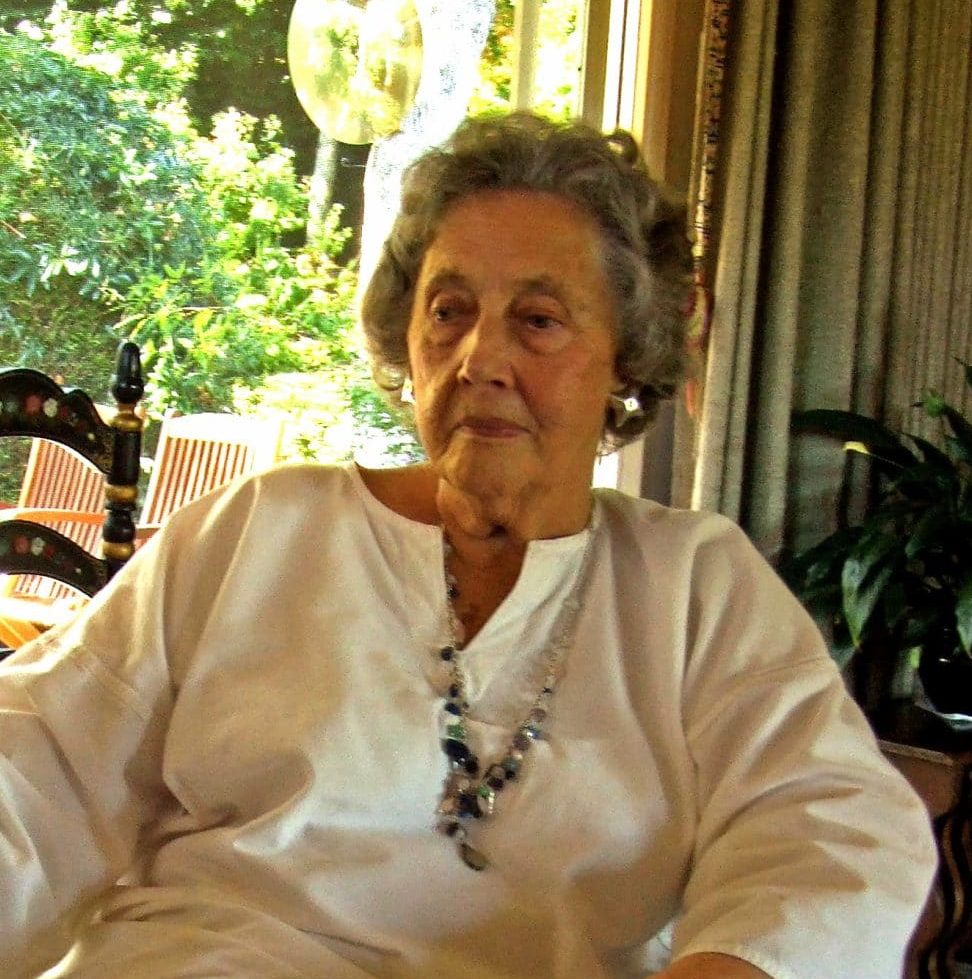
P.K. Page is the author of more than a dozen books, including poetry, a novel, short stories, essays and books for children. Awarded a Governor General’s Award for poetry (The Metal and the Flower) in 1954, Page was also on the shortlist for the Griffin Poetry Prize (Planet Earth) in 2003 and awarded the BC Lieutenant Governor’s Award for Literary excellence in 2004. P.K. Page died in January 2010.
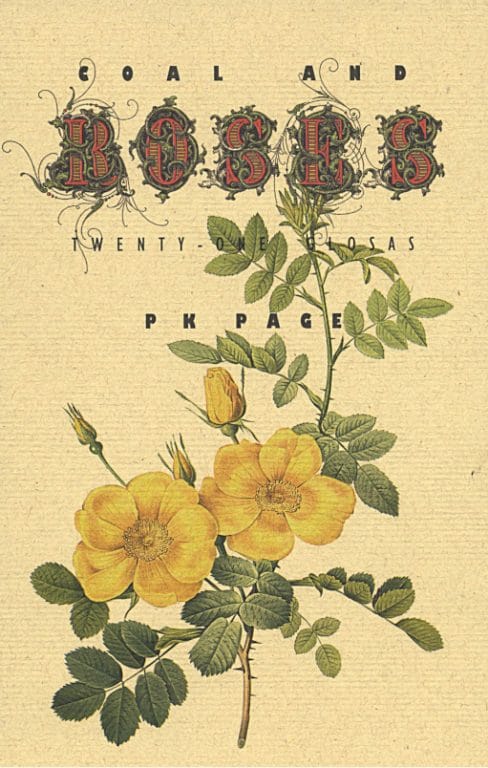
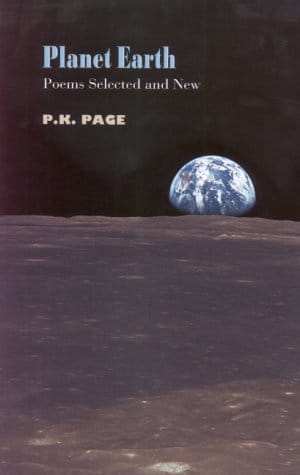
- 2010
- 2003
Judges’ Citation
How heartening to be reminded that creativity, zest and curiosity can endure, even flourish, into great old age. Coal and Roses is wholly unusual and possibly unique.
Though we were not to know it, Coal and Roses was the last book [of poetry] to be published by P.K. Page, appearing months before her death at the age of 93. Therefore it marks the close of a long and creative life. How heartening to be reminded that creativity, zest and curiosity can endure, even flourish, into great old age. Coal and Roses is wholly unusual and possibly unique. It’s a collection of 21 glosas – a glosa being an intricate difficult form. Each poem begins with four lines from another poet – Anna Akhmatova, Thom Gunn, Zbigniew Herbert and Ted Hughes all feature – and those four lines are then spun and meditated upon by Page herself, to form a new poem, where every stanza closes with a line from the master. The result is a history of poetry, a kind of memoir and a homage from one nearing life’s end, to her forebears and colleagues. It is a fully achieved project, which does what literature does best – abolishes the borders of life and death, time and culture and language, and sets all in a great conversation.
Selected poems
by P. K. Page
Let us consider kissing. Nothing to do with love.
Or something. Sometimes.
But not as world-wide a custom as one might suppose.
That being so
I am curious to know
what, in those unkissing cultures,
they do with their lips?
Copyright © P.K. Page, 2002
from Alphabetical
In his blackest suit
the father carries the coffin
It is light as a box of Kleenex
He carries it in one hand
It is white and gold
A jewel box
Their baby is in it
In the unconscionable weather
the father sweats and weeps
The mother leans
on the arms of two women friends
By the sacred light of the church
they are pale as gristle
The priests talk Latin
change their elaborate clothes
their mitres, copes
their stoles embroidered by nuns
Impervious to grief
their sole intention
is the intricate ritual
of returning a soul to God
this sinless homunculus
this tiny seed
Copyright © P.K. Page, 2002
Funeral Mass
Green, how much I want you green.
Great stars of white frost
come with the fish of darkness
that opens the road of dawn.
– Somnambular Ballad (Stephen Spender and G.L. Gili, trs.)
Landscape of crystals
rock salt and icebergs
white trees, white grasses,
hills forged from pale metals
padlock and freeze me
in the Pleistocene.
See my skin wither
heart become brittle
cast as the Snow Queen.
Green, how much I want you green.
Green oak, green ilex
green weeping willow
green grass and green clover
all my lost youth.
Come before springtime
before the brown locust
come like the rain
that blows in the night
and melts to fine dust
great stars of white frost.
Water, sweet water
chortling, running
the chinooks of my childhood
warm wind, the ripple
of icicles dripping
from my frozen palace.
How sweet the water
moonstones and vodka
poured from a chalice
with the fish of darkness.
Come water, come springtime
come my green lover
with a whistle of grass
to call me to clover.
A key for my lock
small flowers for my crown.
The Ice Age is over,
green moss and green lichen
will paint a green lawn
that opens the road of dawn.
Copyright © P.K. Page, 2009
Green, How Much I Want You Green
And the first age was Gold.
Without laws, without law’s enforcers.
This age understood and obeyed
What had created it.
– “Creation,” Ted Hughes
What was, before the world
no one can imagine
and then the Creator created
winds and skies and seas.
Earth, with its fruits and trees,
before the world was old,
blossomed in sweet profusion.
Fish and flesh and fowl
were, magically, manifold.
And the first age was Gold.
And man appeared, and woman
innocent, full of wonder.
Eden, one myth called it,
Paradise, another.
Whatever the name, it was
flawless, an age of glory,
golden, sun-filled, honeyed,
lacking both crime and cunning.
It was a consummate order –
Without laws, without law’s enforcers.
Day followed night, the sky
cloudless, the air sweet-scented.
Night followed day, the stars
bright – Orion striding,
Cygnus, the Southern Cross,
the Lesser Water Snake.
All in their proper places
linked to the earth and shining –
a cosmological guide
this age understood and obeyed
Minerals, plants and all
animals and humans
behaved according to
their original design.
Birds in their flight and flowers,
trees multifoliate,
salt in the mine, and water –
each honoured and celebrated
harmonized with and trusted
what had created it.
Copyright © P.K. Page, 2009
The Age of Gold
Intractable between them grows
a garden of barbed wire and roses.
Burning briars like flames devour
their too innocent attire.
Dare they meet, the blackened wire
tears the intervening air.
Trespassers have wandered through
texture of flesh and petals.
Dogs like arrows moved along
pathways that their noses knew.
While the two who laid it out
find the metal and the flower
fatal underfoot.
Black and white at midnight glows
this garden of barbed wire and roses.
Doused with darkness roses burn
coolly as a rainy moon:
beneath a rainy moon or none
silver the sheath on barb and thorn.
Change the garden, scale and plan;
wall it, make it annual.
There the briary flower grew.
There the brambled wire ran.
While they sleep the garden grows,
deepest wish annuls the will:
perfect still the wire and rose.
Copyright © P.K. Page, 2002
The Metal and the Flower
Every other day I am an invalid.
Lie back amng the pillows and white sheets
lackadaisical O lackadaisical.
Brush my hair out like a silver fan.
Allow myself to be wheeled into the sun.
Calves’-foot jelly, a mid-morning glass of port,
these I accept and rare azaleas in pots.
The nurses humour me. The call me ‘dear’.
I am pilled and pillowed into another sphere
and there my illness rules us like a queen,
is absolute monarch, wears a giddy crown
and I, its humble servant at all times, am its least
serf on occasion and excluded from the feast.
Every other other day I am as fit
as planets circling.
I brush my hair into a golden sun,
strike roses from a bush,
rare plants into pots
blossom within the green of my eyes, I am
enviable O I am enviable.
Somewhere in between the two, a third
wishes to speak, cannot make itself heard,
stands unmoving, mute, invisible,
a bolt of lightning in its naked hand.
Copyright © P.K. Page, 2002